He Swept the Floors of Wall Street. Then He Changed How the Whole World Invests.
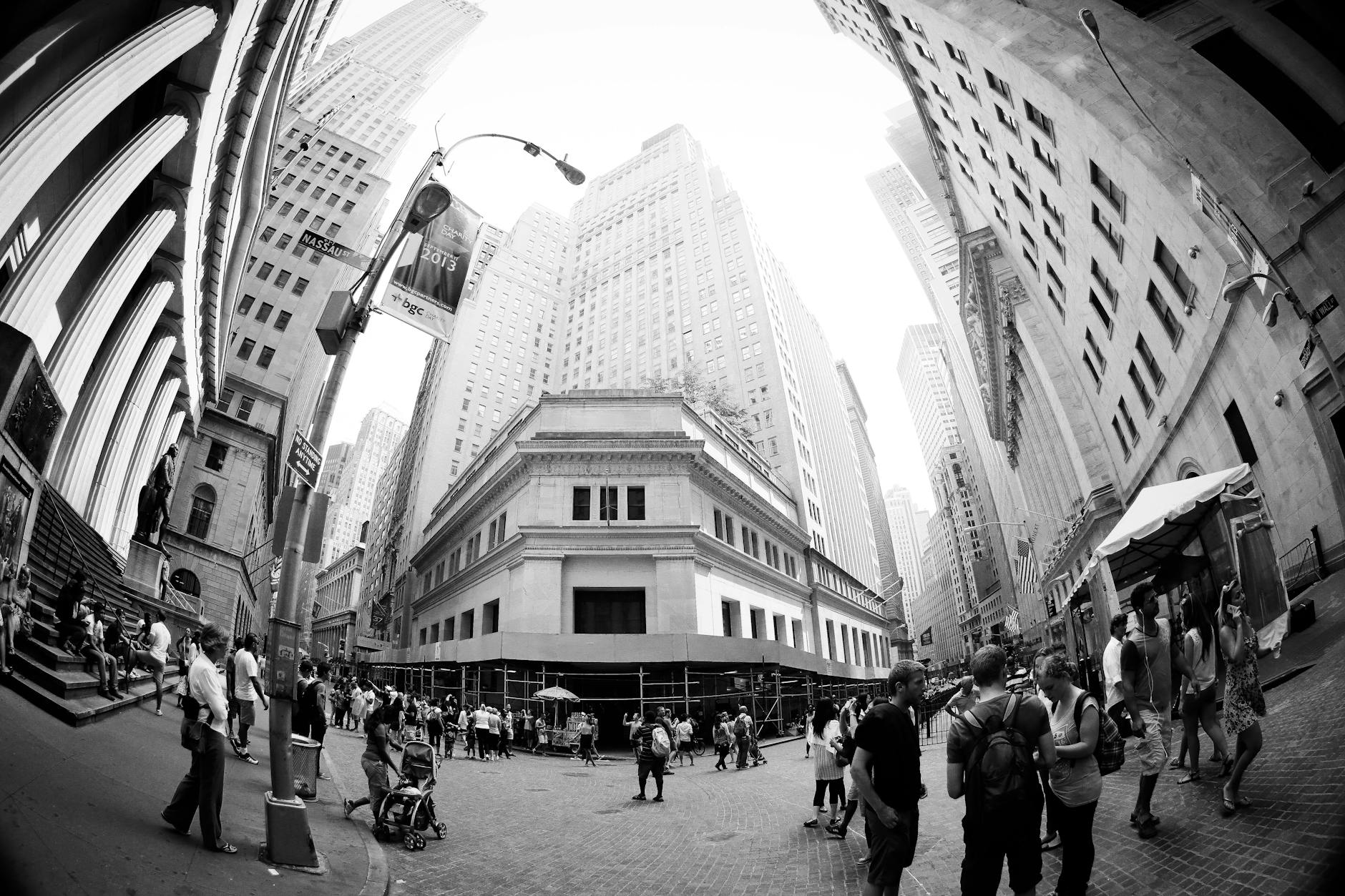
He Swept the Floors of Wall Street. Then He Changed How the Whole World Invests.
There's a version of American success that looks like a straight line — prep school, elite college, the right handshake at the right moment. John Moody's version looked nothing like that. It started with a mop.
In the late 1800s, a teenage Moody arrived in New York City with almost no money and even fewer connections. He was the son of a modest New Jersey family, and the gleaming towers of lower Manhattan were not built for people like him. But they needed people like him — to sort the mail, run the messages, and keep the floors clean. So that's where he started.
The Education Nobody Offers in a Classroom
What's easy to miss about those early years is what Moody was actually doing while he worked those unglamorous jobs. He wasn't just surviving. He was watching.
Every day, he moved through offices where men in expensive suits made decisions worth millions of dollars. He listened to the language of finance without being invited into the conversation. He observed which firms were scrambling and which were steady. He noticed the gap between what companies said about themselves and what their actual operations looked like up close. It was an education in the reality of American business — unfiltered, unspun, and completely invisible to anyone who'd only ever seen Wall Street from the inside of a boardroom.
By the time Moody had worked his way up to a clerical position at a brokerage house, he had already spent years absorbing something that most financial professionals never get: a ground-floor view of how money actually moves. Not in theory. In practice. In the daily chaos of a market that was, at the turn of the twentieth century, almost completely opaque to ordinary Americans.
And that opacity was the problem he decided to solve.
The Wild West of American Investment
In 1900, investing in American railroads and industrial companies was essentially a gamble in the dark. Corporations issued bonds to raise capital, but there was no standardized way for investors to know whether those bonds were safe or essentially worthless. The wealthy had access to private networks of information — bankers who whispered to bankers, insiders who traded on knowledge that never reached the public. Everyone else was guessing.
Moody had spent enough time near the bottom to understand exactly how badly ordinary people needed better information. In 1900, he published Moody's Manual of Industrial and Miscellaneous Securities — a comprehensive guide to publicly traded stocks and bonds that sold out almost immediately. It was blunt, practical, and written by someone who understood that most readers weren't finance professionals. They were people trying not to get taken.
The manual was a hit. Then the Panic of 1907 wiped out Moody's business almost entirely. He lost nearly everything.
The Comeback That Rewrote the Rulebook
A lesser person might have read that as a signal to quit. Moody read it as a research problem.
While rebuilding, he kept turning over the same question: what if, instead of just describing securities, you rated them? What if there was a simple, standardized way to tell investors how risky a bond actually was before they bought it?
In 1909, he launched Moody's Analyses of Railroad Investments, introducing a letter-based rating system — the ancestor of the A, B, and C ratings that still define global credit markets today. The concept seems obvious in hindsight. At the time, it was revolutionary. For the first time, an independent third party was evaluating the creditworthiness of major American corporations and giving the public a plain-language verdict.
The financial establishment was not universally thrilled. There's a particular kind of resistance that greets outsiders who show up with better ideas — a suspicion that anyone who didn't come through the approved channels can't possibly understand the system well enough to improve it. Moody understood the system because he hadn't come through the approved channels. He'd seen it from underneath.
What the View From the Bottom Actually Teaches You
Moody's Investors Service — the company he built from that 1909 publication — is today one of the three most powerful credit rating agencies on the planet. Along with Standard & Poor's and Fitch, Moody's shapes the cost of borrowing for corporations, municipalities, and governments worldwide. When Moody's changes a rating, markets move.
The irony is almost too neat: the man who spent his early career being overlooked built the institution whose entire purpose is to make sure nobody overlooks what matters.
But there's something worth sitting with beyond the satisfying arc of the story. Moody's ground-level years weren't a detour from his eventual success — they were the engine of it. The instincts he developed watching finance from the mailroom, the skepticism he carried from seeing the gap between corporate presentation and corporate reality, the empathy he had for investors who lacked insider access — none of that was available in any textbook or business program of his era.
He got it by showing up to the unglamorous work and paying attention.
The Odd Path Was the Point
American business mythology tends to celebrate the visionary — the person who saw something nobody else saw and built an empire from the idea. What it underplays is the role of position. Where you stand determines what you can see. And sometimes the people standing in the most overlooked corners of an industry are the ones with the clearest view of what's actually broken.
John Moody started at the very bottom of Wall Street. He ended up changing how the entire world assesses financial risk. The path between those two points wasn't accidental. It was, in the most literal sense, the education that made everything else possible.
Next time you hear about a bond being rated investment grade, remember the kid who used to sweep the floors of the buildings where those decisions get made. He built the system that keeps people honest.