Too Curious for Her Own Good: The Secretary Who Revolutionized Fundraising by Getting Fired

The Questions That Wouldn't Stop
Eleanor Whitman had a problem: she couldn't help herself from asking why. In 1923, as a 22-year-old secretary at a Boston insurance firm, this curiosity made her unemployable. Her supervisors complained that she spent too much time wondering how the company actually made money, who their clients were, and why certain procedures existed.
 Photo: Eleanor Whitman, via www.postavy.cz
"Miss Whitman displays an inappropriate interest in matters beyond her station," read her termination letter. It was the third job she'd lost in eighteen months for the same reason.
What her bosses saw as insubordination would eventually revolutionize how America raises money for worthy causes.
Exile to the Edges
After her third dismissal, Eleanor found herself effectively blacklisted from respectable office work. Word traveled fast in Boston's tight-knit business community, and "asks too many questions" was code for "trouble." She took whatever work she could find: part-time bookkeeping for small charities, organizing church socials, managing correspondence for civic groups.
It was unglamorous work that paid poorly, but it gave Eleanor something her previous jobs hadn't: access to the complete financial picture. At the insurance company, she'd only seen fragments. Now, working for organizations that couldn't afford to compartmentalize information, she could observe how money actually flowed—or failed to flow—through an entire operation.
The Pattern in the Chaos
By 1925, Eleanor was managing fundraising campaigns for a dozen different Boston-area organizations. Each group approached their financial needs differently, but she began noticing patterns that none of them recognized individually.
Wealthy donors, she observed, weren't motivated by need alone. They responded to specific combinations of personal connection, social recognition, and tangible impact. Small donors behaved differently—they gave consistently when they understood exactly how their contributions would be used, but lost interest when appeals became too general or abstract.
Most importantly, she discovered that successful fundraising wasn't about asking for money. It was about creating relationships that made giving feel natural and meaningful.
The Whitman Method
Working from her kitchen table, Eleanor began developing what she called "community investment strategies." Instead of traditional fundraising letters that emphasized organizational needs, she created campaigns that connected donors directly to outcomes.
For a children's hospital, she didn't ask for money to "support pediatric care." Instead, she invited donors to "sponsor a recovery room" or "fund a month of playground activities." Contributors received regular updates about their specific investment, creating ongoing engagement rather than one-time transactions.
For a literacy program, she established "reading partnerships" where donors could track the progress of individual students they supported. The emotional connection dramatically increased both donation amounts and donor retention.
The Breakthrough Campaign
Eleanor's methods caught national attention during the 1928 flood relief efforts in Vermont. While other organizations struggled to raise funds for abstract "disaster relief," Eleanor created the "Adopt a Family" program that matched donors with specific households affected by the flooding.
Donors received letters from "their" families, photographs of rebuilding progress, and detailed accounts of how their money was being used. The program raised three times more money than traditional relief efforts and maintained donor engagement long after the immediate crisis had passed.
Social workers reported that the personal connections formed during the campaign led to ongoing support that helped families rebuild not just their homes, but their long-term economic stability.
Recognition Without Credit
By 1930, Eleanor's techniques were being quietly adopted by major philanthropic organizations across the country. The American Red Cross incorporated her "personal connection" model into their disaster response protocols. Universities began using her "investment partnership" approach for capital campaigns. Religious organizations adapted her methods for building funds and missionary support.
Yet Eleanor herself remained largely invisible. The organizations that hired her as a consultant rarely credited her publicly, preferring to present innovations as internal developments. As a woman working in finance-adjacent fields during the Depression, she lacked the professional standing to claim ownership of her ideas.
The Teaching Years
In 1935, Eleanor accepted a position at Simmons College, training young women in what was then called "institutional advancement." Her students went on to leadership roles at hospitals, universities, and social service organizations across the country, carrying her methods into new contexts and applications.
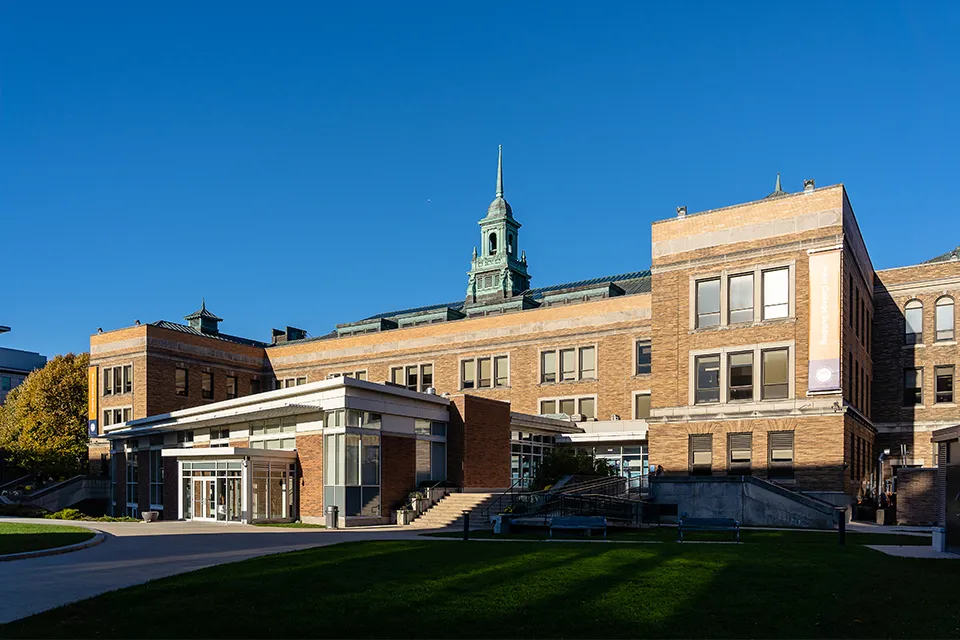 Photo: Simmons College, via www.simmons.edu
Through her teaching, Eleanor's influence spread exponentially. Her students adapted her techniques for different types of organizations and donor communities, refining and expanding the basic principles she'd developed in her kitchen table years.
The Modern Legacy
Today, virtually every major nonprofit organization uses some version of Eleanor's community investment approach. Donor stewardship programs, impact reporting, and relationship-based fundraising are standard practices that trace directly back to her innovations in the 1920s and 1930s.
Modern fundraising software automates many of the personal touches that Eleanor managed by hand, but the underlying psychology remains unchanged: people give more generously and consistently when they feel personally connected to the impact of their contributions.
The Questions That Changed Everything
Eleanor Whitman's story illustrates how professional exile can become unexpected opportunity. Forced to work on the margins because she couldn't stop asking questions, she gained perspectives that would have been impossible from within established institutions.
Her curiosity about how money really moved through organizations—the very trait that made her unemployable in traditional business settings—became the foundation for approaches that transformed American philanthropy.
Sometimes the most important innovations come from people who were considered too curious for their own good. Eleanor's questions didn't just get her fired—they changed how an entire sector thinks about the relationship between donors and causes.
In the end, being "inappropriately interested in matters beyond her station" turned out to be exactly the qualification that American fundraising needed most.