Nobody Invited Them. They Changed Everything Anyway: The Accidental Conversations That Launched Five Unlikely Careers

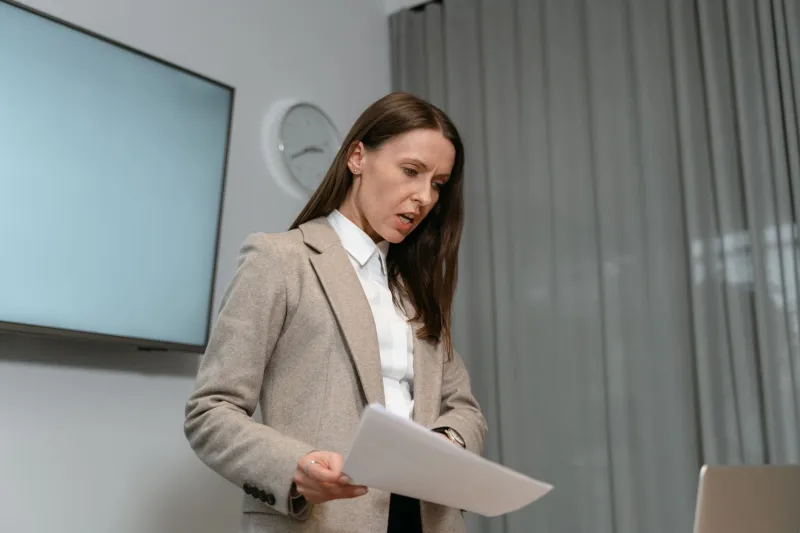
Photo by Photo by Vitaly Gariev on Unsplash on Unsplash
Most career advice focuses on preparation. Research the company. Tailor your resume. Practice your answers in the mirror. Come ready.
But some of the most consequential professional pivots in American history happened in rooms where the person who changed everything wasn't prepared at all. They weren't supposed to be there. They didn't have an appointment. They heard something they weren't meant to hear, or sat in a chair that wasn't theirs, and then — instead of staying quiet the way the situation clearly called for — they opened their mouth.
The results were, repeatedly, extraordinary.
The Delivery Driver Who Asked About the Numbers
In the early 1970s, a young man named Ray was working courier routes for a small Chicago firm, dropping off documents at offices across the city. One afternoon, running ahead of schedule, he sat in the lobby of an accounting firm waiting for a signature. The conference room door was open. Inside, a consultant was walking a roomful of small business owners through their cash flow problems — explaining why profitable businesses kept running out of money.
Ray had never taken an accounting class. He had no particular interest in finance. But something in what the consultant was describing matched a problem he'd watched his own family's small grocery store wrestle with for years without ever being able to name it. He leaned in. He listened. When the consultant paused to take a question, Ray — from the lobby, holding a manila envelope — raised his hand.
The consultant laughed. Then he answered. Then he asked Ray what his background was.
Six months later, Ray was enrolled in a night program in business administration on a scholarship that consultant helped him find. Twenty years after that, he was running a financial literacy nonprofit that had reached more than forty thousand small business owners in underserved communities across the Midwest.
He was in the lobby. He asked anyway.
The Wrong Conference Room
Susan was an administrative assistant at a mid-sized publishing house in New York in the late 1980s. She was supposed to be in the third-floor conference room at two o'clock for a routine scheduling meeting. She walked into the second-floor conference room instead.
What was happening on the second floor was a pitch meeting — three agents presenting manuscripts to senior editors. Susan sat down, assumed she was early, and started listening. The manuscript being discussed was a children's book series with an unusual structural concept: each book in the series was designed to be read in a different order depending on the reader's age, with the story shifting meaning rather than just vocabulary.
The editors were skeptical. The agents were struggling to explain it. Susan, who had been tutoring kids in reading on weekends for three years, understood immediately what the concept was trying to do. She said so. Out loud. In a meeting she was not part of, to people who outranked her by several floors.
The room went quiet. Then one of the editors asked her to explain further.
The series was eventually published. Susan was brought onto the project as a developmental consultant — a role that didn't exist at the company before that afternoon. She spent the next decade building out the educational publishing division she accidentally auditioned for from the wrong chair.
The Waiting Room That Wasn't
In 1995, a young environmental science graduate named David was killing time in the anteroom of a federal building in Washington, D.C., waiting for his roommate to finish an interview for a government position. The anteroom happened to adjoin a small meeting room where a working group was discussing watershed management policy — specifically, a gap in the regulatory framework around agricultural runoff in river tributaries.
David had written his graduate thesis on exactly this topic. He hadn't published it. He hadn't presented it anywhere. He was twenty-four years old and waiting for his roommate.
When the meeting broke up and participants filed through the anteroom, David stopped one of them and mentioned, as politely as he could manage, that he thought the regulatory gap they were describing had a specific structural cause that their proposed solution wouldn't address. He explained why in about ninety seconds.
The man he'd stopped was a senior EPA policy director.
David was asked to submit a written summary. His summary was incorporated into a policy brief. The policy brief influenced revisions to tributary protection guidelines that are still in effect today. David went on to spend fifteen years working in federal environmental policy, having entered the field through a waiting room he wasn't supposed to be sitting in.
The Plus-One Who Wouldn't Stay Quiet
Lena attended a technology industry dinner in San Francisco in 2003 as the guest of a friend who worked at a startup. She was a high school art teacher. She had no particular reason to be at a table full of engineers and venture capitalists other than that her friend had an extra ticket.
The conversation turned to user interface design — specifically, why so many software products were being built by people who were clearly brilliant engineers and clearly terrible communicators. Someone at the table said, half-joking, that what Silicon Valley needed was designers who could translate between technical possibility and human behavior.
Lena had been doing exactly that for nine years. Not in software — in classroom curriculum design. She'd spent nearly a decade figuring out how to make complex information legible to people who didn't share the expert's frame of reference. She said so.
The table got interested. One of the VCs asked her to come in and talk to a portfolio company that was struggling with exactly this problem. The conversation led to a consulting engagement. The consulting engagement led to a full-time role. The full-time role led to a career in UX strategy that she built entirely from the credential she'd earned in a classroom, activated by a dinner she attended as an afterthought.
The Substitute Who Stayed
In a small town in Ohio in the late 1980s, a man named Gerald was filling in for a friend at a local Chamber of Commerce meeting — a favor, nothing more. He ran a small hardware store. He had no particular interest in economic development policy.
The meeting was about a proposed industrial rezoning that would bring a manufacturing facility to the edge of town. The arguments were going back and forth. Gerald, who had spent fifteen years watching which businesses in his town survived and which didn't, noticed that nobody in the room was talking about workforce pipeline — where the workers for this facility would actually come from, and what happened to the surrounding retail economy when those workers' schedules changed.
He raised his hand. He talked for four minutes. The room shifted.
Gerald ended up on the economic development committee. Then he chaired it. Then he ran for city council on the platform of small-business workforce integration that he'd developed, somewhat accidentally, in a meeting he attended as a stand-in for someone else.
The Pattern in the Accidents
These five stories aren't really about luck. They're about something more specific: what happens when someone without a stake in looking smart asks the question that everyone with a stake has been too careful to ask.
The accidental attendee doesn't have a position to protect. They don't have a reputation in the room. They have nothing to lose by saying what they actually think.
That turns out to be an enormous advantage.
The wrong room. The open door. The extra chair. Sometimes the most direct path to your life's work runs straight through someone else's meeting — as long as you're willing to speak up when you get there.