Down the Ladder on Purpose: The Executive Who Gave Up Everything to Figure Out What Was Actually Going On
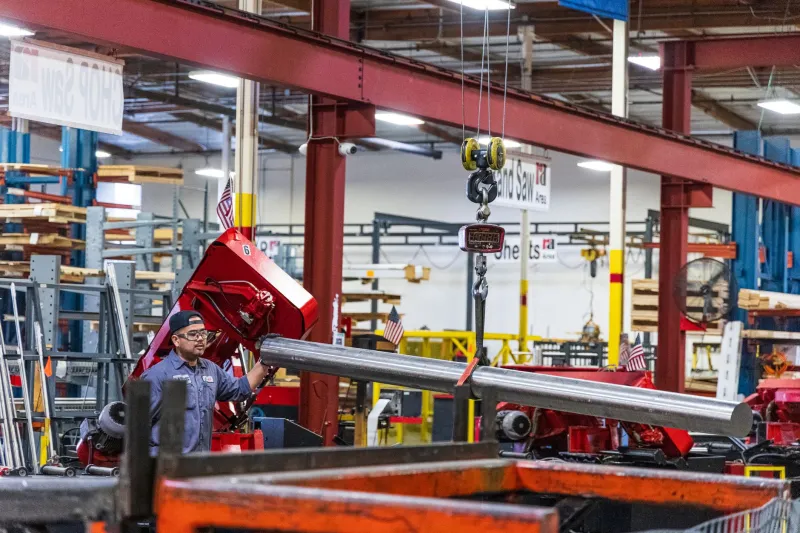
Most people spend their careers trying to climb. Daniel Creel spent eight years trying to descend — carefully, methodically, and with a researcher's eye for what you can only see from the bottom.
In 1987, Creel was forty-one years old and doing well by any conventional measure. He'd spent fifteen years rising through the management ranks at a mid-sized industrial manufacturing firm in the Midwest, eventually landing a VP-level position overseeing three facilities and about eight hundred employees. Good salary. Company car. An office with actual walls.
He walked away from all of it voluntarily, took a significant pay cut, and spent the better part of the next decade working jobs that were, by his previous world's standards, beneath him.
What he was looking for, he'd later explain, was the view from the other side of the decisions he'd been making for fifteen years.
The Question That Wouldn't Let Him Sleep
The thing that broke Creel's confidence in his own judgment wasn't a dramatic failure. It was a small, persistent unease that had been building for years.
He was good at his job. His facilities hit their numbers. His people didn't quit at unusual rates. By every metric his company used to evaluate management performance, he was succeeding. But Creel kept noticing a gap between the information that reached him and the reality he'd occasionally glimpse when he walked the floor unannounced. Problems that had apparently been solved kept quietly reappearing. Efficiency improvements that looked clean on paper seemed to generate friction that nobody was formally reporting.
He started asking his direct reports about it. They gave him reassuring answers. He asked the supervisors below them. More reassurance. He tried to ask the line workers directly and found, with some discomfort, that the conversations were friendly but carefully managed — nobody was going to tell the VP something that might travel back up the chain in a damaging way.
The information hierarchy that was supposed to keep him informed was, in practice, functioning as a filter. And he had no reliable way to know what was being filtered out.
The Experiment
Creel's solution was extreme enough that most of his colleagues thought he'd had some kind of breakdown.
He resigned his position, negotiated a consulting arrangement that would keep him financially afloat at a reduced level, and took a job as a line supervisor at a different manufacturing facility — a competitor's plant, where nobody knew his background. He told them he'd been in middle management and was looking to step back from the stress. It was true enough.
Over the following years, he worked his way through a deliberate sequence of roles: line supervisor, quality control inspector, shift scheduler, maintenance coordinator. He never took a position that put him back in senior management. He took careful notes. He paid particular attention to the moments when information stopped moving upward — when a problem was absorbed and neutralized at a lower level rather than reported to someone with the authority to actually fix its root cause.
What he found was systematic, and it was uncomfortable.
What the Floor Knew That the Office Didn't
The central discovery wasn't surprising in retrospect, but it was striking in its consistency: the people closest to the actual work almost always knew more about operational problems than the people responsible for solving them. And the organizational structures designed to move that knowledge upward were, in practice, functioning as sieves that retained the bad news and passed along the good.
This wasn't malicious. It wasn't primarily about people protecting their jobs, though that was a factor. It was more structural than that. Every layer of management represented a translation — information got summarized, contextualized, softened, or simply lost because the person doing the translating had limited time and a natural incentive to present things in the most favorable light possible.
Creel also documented something subtler: the people at the bottom of organizational hierarchies had developed sophisticated informal systems for managing problems that the official structure couldn't handle. Workarounds. Unofficial protocols. Arrangements between workers that kept things running despite process designs that, on paper, should have caused regular gridlock.
Those informal systems were almost entirely invisible to senior leadership. And because they were invisible, they were routinely disrupted by top-down efficiency initiatives that looked rational from above and were quietly catastrophic from below.
The Book That Changed the Conversation
Creel spent two years after his experiment writing up his findings. The resulting manuscript was rejected by four business publishers who found it too critical of management culture to be commercially viable. A small academic press finally picked it up in 1997.
It sold modestly at first. Then it didn't.
Word spread through organizational psychology departments, then through business school faculty who found it useful precisely because it was uncomfortable. It was assigned in MBA programs. It was cited in corporate training materials. A paperback edition in 2001 found a broader audience among middle managers who recognized their own organizations in Creel's descriptions with the particular clarity of people who'd been trying to articulate the same problem for years without quite finding the language.
The core argument — that organizational rank and organizational knowledge are inversely correlated in ways that most management theory fails to account for — is now a fairly standard premise in serious leadership literature. The idea that the most accurate picture of how a company actually functions lives at the bottom of the hierarchy, not the top, has informed everything from lean manufacturing methodology to contemporary approaches to psychological safety in the workplace.
The Counterintuitive Career
What makes Creel's story strange, and worth sitting with, is that his most important professional contribution came not from accumulating power and using it, but from deliberately relinquishing it.
The insight he needed was inaccessible from the position he'd earned. The only way to get it was to go somewhere that position didn't follow him.
That's a hard thing to choose. Most people, given a corner office and a company car, find reasons to stay. Creel found reasons to leave — not out of disillusionment, but out of a specific intellectual honesty about the limits of what he could see from where he was standing.
He went down the ladder on purpose. And what he found at the bottom turned out to be worth considerably more than what he'd left at the top.