He Grew Up Watching the Fields Go Dry. Then He Figured Out How to Save Them.
The Education Nobody Assigned
There is a particular kind of knowledge that comes only from watching something you love slowly disappear. Tomás Guerrero learned about water the way most people learn about loss — gradually, then all at once, and never quite the same afterward.
He was born in the early 1960s in a labor camp outside Fresno, California, the third of six children in a family that followed the harvests. Strawberries in the spring. Tomatoes through the summer. Stone fruit when the timing was right. His father had come up from Michoacán with strong hands and an intimate understanding of soil. His mother kept records of every farm they worked — wages, conditions, water availability — in a series of composition notebooks she stored in a waterproof bag.
Water availability. That detail matters.
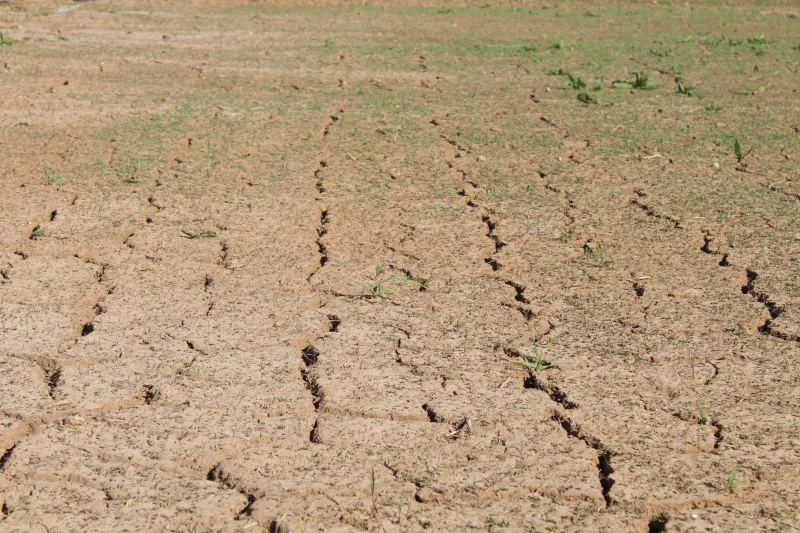
Even as a child, Guerrero understood that water was the variable everything else depended on. He watched fields that had been lush the previous season turn to cracked clay. He helped carry irrigation hoses that were too heavy for a ten-year-old and watched water disappear into the ground before it reached the roots it was meant for. He heard the adults talk about which farms were "good with water" and which ones weren't, and he understood that this was a serious thing — as serious as wages, maybe more.
The Valley in the 1970s
The Central Valley of California in the 1970s was a complicated place to grow up poor and brown and paying attention. Agricultural water use was enormous and largely unexamined. Flood irrigation — simply flooding fields and letting crops absorb what they could — was standard practice on much of the land Guerrero's family worked. It was wasteful in ways that everyone vaguely knew but nobody had strong incentive to change, because water was still cheap and the assumption was that it would stay that way.
Guerrero's family worked farms that were starting to feel the early tremors of what would become the valley's chronic water crisis. Wells were dropping. Seasonal creeks that had run reliably were running thin. The adults around him adapted, as migrant workers always do, by moving on to somewhere the situation was slightly less bad.
But Guerrero couldn't stop thinking about it. Why were the farms using so much water? Where was it going? What would happen when it was gone?
He was twelve years old asking these questions. He had no one to ask them to who had answers.
The Incomplete Education
Guerrero graduated from a high school in the San Joaquin Valley — his family had, by then, settled into a more permanent situation — and enrolled in a state college with the intention of studying agriculture. He lasted a year and a half before money ran out and he had to go back to work.
He spent the next several years doing what he knew: farm labor, then farm supervision, then eventually a management role at a mid-sized vegetable operation outside Bakersfield. He was good at the work. He was also, quietly and without any formal research framework, conducting an ongoing investigation into water use.
He kept logs — his mother's habit, inherited. He tracked how much water was applied to different crops under different conditions. He noted what the soil looked like before and after irrigation cycles. He talked to older farmworkers who had decades of observation in their hands and almost no outlet for sharing it with people who might act on it.
By the mid-1980s, he had developed a set of practices — modified drip irrigation schedules, soil moisture indicators made from inexpensive materials, planting pattern adjustments that reduced evaporation — that were cutting water use on the farms he managed by amounts that seemed, to outside observers, almost implausible.
The Skeptics and the Data
Academic and government agricultural researchers didn't know what to make of Guerrero at first. He showed up to a regional water conservation conference in 1988 without credentials, without a university affiliation, and without a formal paper. He had a binder.
The binder contained seven years of field data from four different farms. It was meticulous. It was also, as one UC Davis researcher later acknowledged publicly, more practically useful than most of the research being presented at that same conference by people with PhDs.
The skepticism didn't disappear overnight. But the data was hard to dismiss, and Guerrero was persistent in the specific way that people are persistent when they have been watching a problem their entire lives and have run out of patience for people who discovered it last Tuesday.
He began working with university extension programs — not as a student or employee but as a collaborator. He trained other farm managers. He consulted with state water agencies that were, by the late 1980s, starting to take agricultural conservation seriously in ways they hadn't before.
What He Built From What He Knew
The techniques Guerrero developed and refined over the following decades — particularly his work on deficit irrigation scheduling, which involves deliberately giving crops slightly less water than they'd ideally prefer in order to build drought resilience without sacrificing yield — became foundational references in California agricultural water policy discussions through the 1990s and 2000s.
He was eventually awarded an honorary degree by a California state university, which he accepted graciously and mentioned only rarely afterward. He co-authored several extension publications. A water conservation methodology he developed is still taught in agricultural programs across the Southwest.
He never stopped working farms. That part was non-negotiable.
The Thing Credentials Can't Give You
What made Guerrero's contribution different from the academic work happening around the same problems wasn't intelligence — the researchers were smart. It wasn't even the data, though the data mattered. It was the nature of his original motivation.
He hadn't come to water conservation as a scientific problem to be solved. He had come to it as a child watching his family's livelihood evaporate, literally, into dry air. That emotional foundation gave him a different relationship to urgency. He wasn't publishing papers on a tenure timeline. He was trying to solve something that had been breaking his world since before he could fully articulate what the world was.
The Central Valley's water crisis is still ongoing. The problems Guerrero identified and spent his life working on are, if anything, more acute now than when he started. But the conservation frameworks that exist today — the language, the practices, the expectation that efficiency is achievable — owe a debt to a kid who grew up following the harvests and couldn't stop asking why the water kept running out.
Some educations, it turns out, can only be earned the hard way.