Eleven Votes Short of Everything — and That Was Exactly Enough
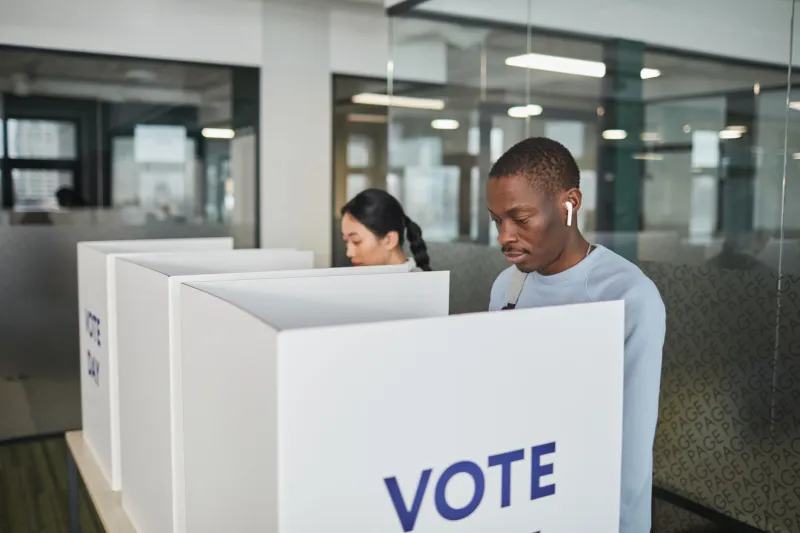
Carol Demarest spent election night 1987 in the back room of a VFW hall in Millbrook, Ohio, watching the numbers come in on a borrowed television set. By 11 p.m., she knew. She had lost the Third Ward city council seat by eleven votes.
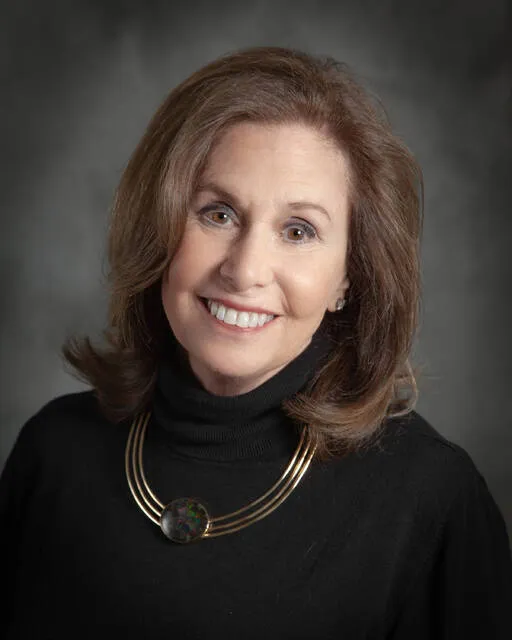 Photo: Carol Demarest, via www.timesleader.com
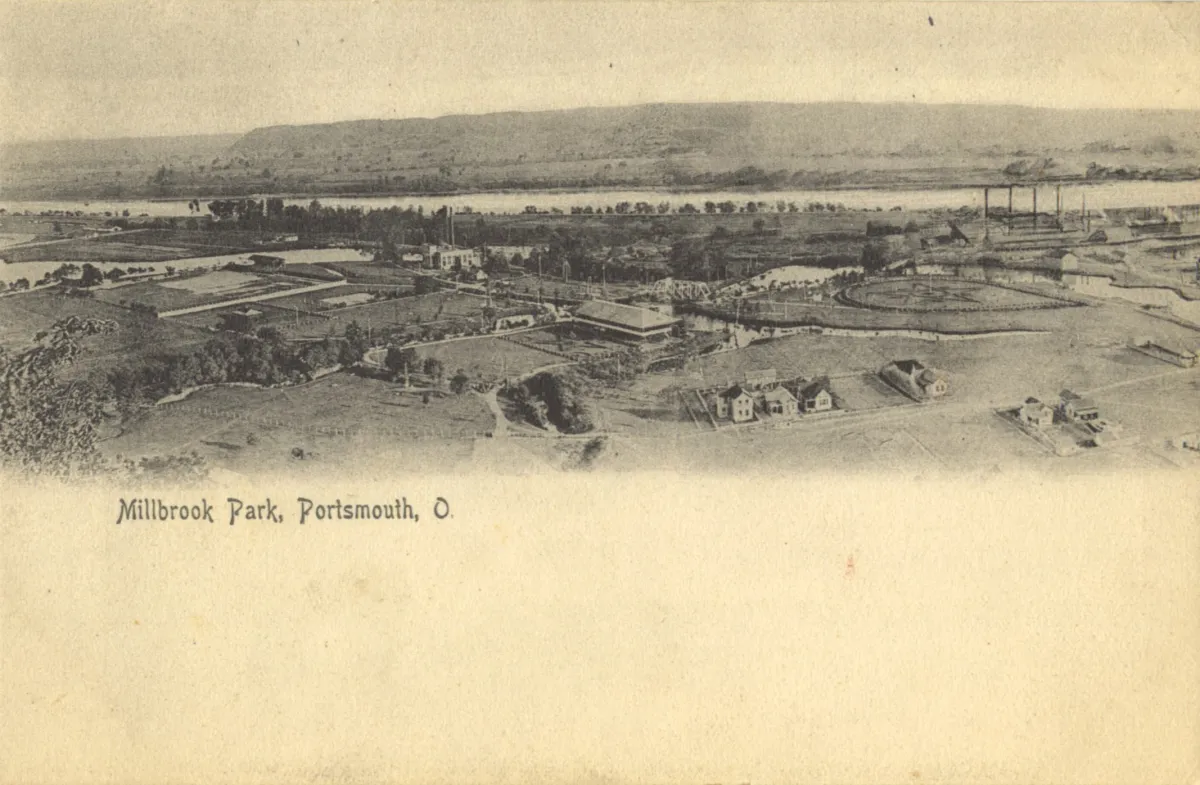 Photo: Millbrook, Ohio, via www.sciotolibrary.org
Eleven. She had personally knocked on more doors than that in a single afternoon.
She drove home, sat at her kitchen table, and did something that would eventually change American civic life — though it would take years before anyone, including Carol, understood that's what was happening. She opened a yellow legal pad and started writing down questions.
Not complaints. Questions.
The Sting That Sharpened Everything
The conventional response to a loss that narrow is a recount request or a quiet retreat from public life. Demarest did neither. What consumed her, in the weeks after the election, wasn't the injustice of the margin — it was the arithmetic of the people who hadn't shown up at all.
Millbrook's Third Ward had 4,200 registered voters. Turnout for the council race was 31 percent. That meant roughly 2,900 people had registered, presumably because they cared enough to put their name on a list, and then stayed home.
Demarest had lost by eleven votes. She had also been beaten by an electorate that mostly didn't exist.
The question she kept circling back to — the one she wrote in capital letters at the top of her legal pad — was simple: Why did they register if they weren't going to vote?
It sounds like a frustrated candidate venting. It was actually one of the more interesting research questions in American political science, and almost nobody was seriously pursuing it at the local level.
Going Door to Door for Different Reasons
Demarest had a day job — she managed billing for a small medical practice — and no institutional support, no academic affiliation, and no budget. What she had was a car, a lot of evenings free, and the kind of focused irritation that makes people do enormous amounts of work for no obvious reason.
Over the following six months, she knocked on doors in the Third Ward again. Not to campaign. To ask.
She talked to roughly 200 non-voters — people she could identify from the registration rolls who had not cast a ballot. She wasn't running a formal survey; she didn't have a methodology or a control group. She was just talking to people and writing down what they said.
What she heard confounded most of the standard explanations for voter non-participation. These weren't people who didn't care. They weren't people who felt their vote didn't matter in any abstract philosophical sense. They were people who had encountered, somewhere between the intention to vote and the act of voting, a friction they hadn't been able to overcome.
Work schedules that shifted at the last minute. Polling places that had moved without clear notification. Childcare that fell through. Confusion about whether their registration had actually gone through. The vague sense that nobody had confirmed the details with them and they weren't entirely sure they had the right information.
Small frictions. Individually surmountable. Collectively, they had produced 2,900 absent voters in one ward of one small Ohio city.
The Card System Nobody Asked For
Demarest's first practical response to what she'd learned was almost comically low-tech. She designed a postcard.
Not a campaign mailer — she was done with campaigns, at least for now. A confirmation card. Something a volunteer could drop in a registered voter's mailbox two weeks before an election that said, essentially: Here's your polling place. Here are the hours. Here's what you'll need to bring. We're glad you're registered. And then, a week later, a reminder.
She recruited eight volunteers from her church and a local garden club. She funded the first mailing out of her own pocket — about $340 for postage and printing. She targeted the 2,900 non-voters from the 1987 race.
In the 1989 municipal elections, Third Ward turnout increased by 14 percentage points.
Demarest didn't claim full credit — there were other factors, and she was careful to say so. But the precinct-level data was suggestive. The wards where her cards had gone out outperformed comparable wards where they hadn't.
She wrote it up in a four-page summary and mailed it, somewhat impulsively, to the League of Women Voters chapter in Columbus.
The Slow Spread of a Simple Idea
What happened next is a story about how genuinely useful ideas travel in civic life — which is to say, slowly, informally, and without nearly enough fanfare.
The Columbus League chapter shared Demarest's summary with its state network. A coordinator in Cleveland adapted the postcard system for a larger urban ward and got similar results. A political science graduate student at Ohio State wrote a seminar paper about it. The paper circulated. A nonprofit in Michigan read the paper.
By the mid-1990s, variations of what Demarest had built — the confirmation-plus-reminder model, the friction-reduction framing, the focus on registered non-voters rather than unregistered citizens — were operating in at least a dozen cities across the Midwest and Southeast.
None of them called it the Demarest System. Most of the people running them had never heard of Carol Demarest. The idea had traveled so far from its origin that the origin had become invisible.
That's how most civic innovation works. It doesn't arrive with a press release.
What Losing Taught Her
In interviews she gave to a regional newspaper in 1998, when a reporter finally connected the dots and tracked her down, Demarest was characteristically matter-of-fact about the whole arc.
"If I'd won by eleven votes instead of losing by eleven votes, I would have been a city council member," she said. "I'd have been worried about potholes and zoning variances. I never would have gone back and asked why people didn't show up. Winning would have answered the wrong question."
She ran for council one more time, in 1993. Lost again, this time by thirty votes. Seemed unbothered.
By then, she was more interested in the space between the registration roll and the ballot box than in anything that happened inside the council chambers. That gap — the distance between civic intention and civic action — had become her life's work.
She spent the 1990s and 2000s training volunteers in a dozen states, refining what she called "friction mapping" — the practice of identifying, ward by ward and precinct by precinct, the specific logistical barriers that kept registered voters at home. Every community had a different friction profile. The solutions had to match.
The Eleven-Vote Legacy
Demarest's methods don't have a famous name. There's no Carol Demarest Foundation, no TED Talk, no bestselling book. She remained, by most measures, a private person in a small Ohio city who had a very bad election night in 1987 and responded to it in an unusually productive way.
But the framework she built from that loss — the idea that voter non-participation is a logistical problem as much as a motivational one, that friction is the enemy of civic engagement, that registered voters who stay home are not apathetic but stranded — has become foundational to a generation of voter engagement work across the country.
The researchers who developed it further got the citations. The nonprofits that scaled it got the grants. The grad students who formalized it got the degrees.
Carol Demarest got eleven votes short of a city council seat and a legal pad full of the right questions.
As it turned out, that was more than enough.