Locked In, Breaking Out: Five Americans Who Changed History From Behind Prison Walls

Photo: vintage prison cell window light bars black and white, via as2.ftcdn.net
A Note Before We Start
This isn't a piece about prison being good. It isn't an argument that suffering produces greatness, or that the American carceral system has some hidden upside worth celebrating. It doesn't.
What it is, is an honest look at five individuals who found themselves inside one of the most restrictive environments a human being can occupy — and who, through stubbornness or obsession or sheer refusal to go quiet, produced work that outlasted their sentences and, in some cases, outlasted the century.
Their stories don't redeem the system that held them. But they do say something worth hearing about what the human mind does when you take away almost everything else.
1. Chester Himes — The Crime Writer Who Invented a Genre in a Cell
Chester Himes was twenty-two years old and already well on his way to disaster when a Cleveland judge sentenced him to twenty-five years in the Ohio State Penitentiary for armed robbery in 1929. He'd dropped out of Ohio State University after a first-year injury, drifted into crime, and arrived at prison with no particular plan for what came next.
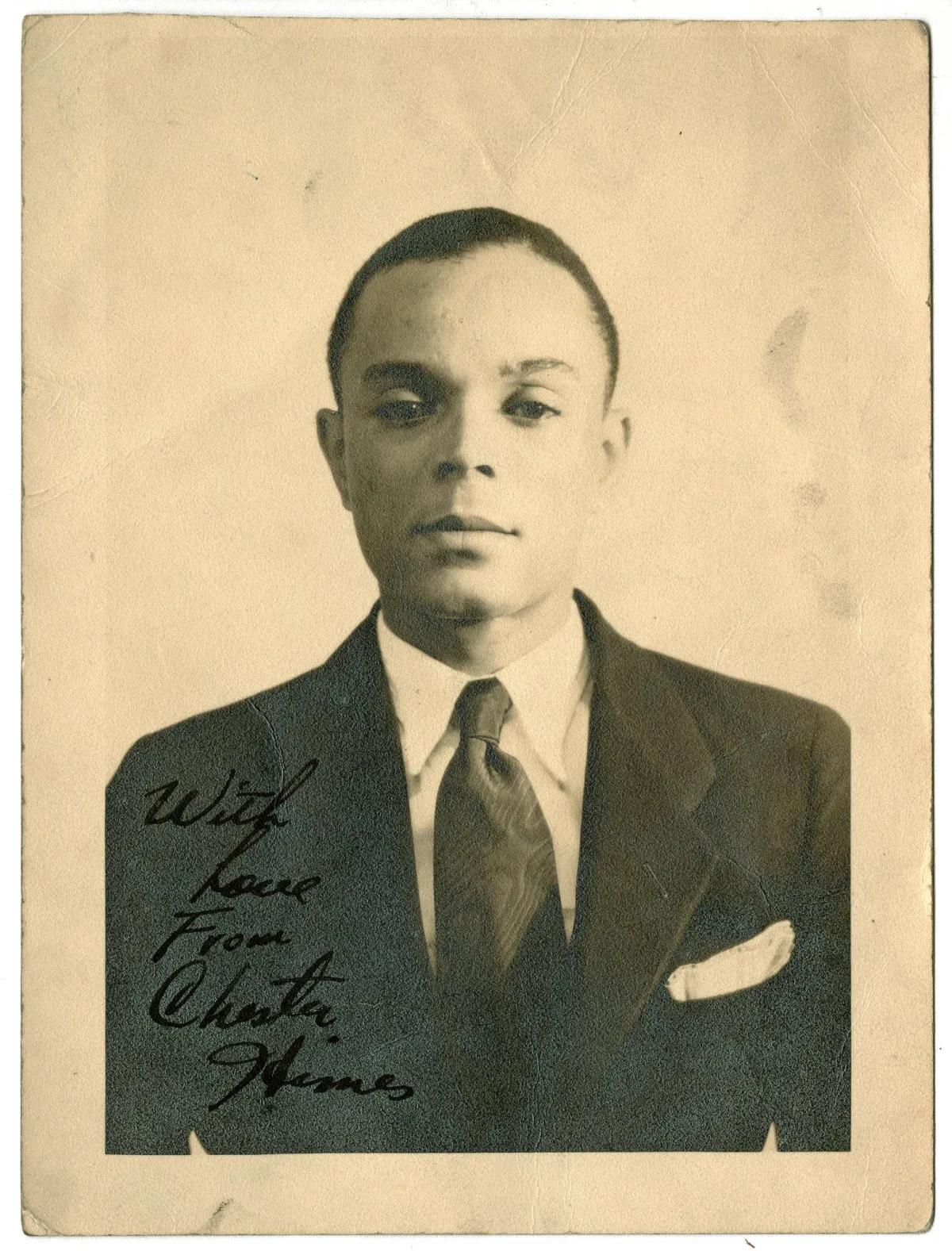 Photo: Chester Himes, via static01.nyt.com
What came next was writing.
Himes started submitting short stories to magazines from inside prison, and by the mid-1930s he was being published in Esquire — a fact that says something remarkable both about his talent and about the editorial culture of that era. He was released in 1936 after serving seven years, carrying a body of work that had been forged in one of the most brutal prison environments in the country (the Ohio State Penitentiary had suffered a catastrophic fire in 1930 that killed more than three hundred inmates while Himes was incarcerated there).
His later Harlem Detectives series — featuring the unforgettable pair of Coffin Ed Johnson and Grave Digger Jones — essentially created the template for American Black crime fiction, influencing generations of writers and filmmakers. The voice he developed in those prison years: hard-edged, darkly comic, unwilling to flinch — it never left his work.
The cell gave him the time. The fire gave him the urgency. Neither was a gift. Both were formative.
2. Robert Stroud — The Birdman Who Became a Pioneering Ornithologist
Robert Stroud is mostly remembered through the softened lens of a 1962 Burt Lancaster film, which presented him as a misunderstood genius unfairly caged by a vindictive system. The reality was considerably messier. Stroud was a violent man who committed serious crimes. He was also, improbably, one of the most significant self-taught ornithologists in American history.
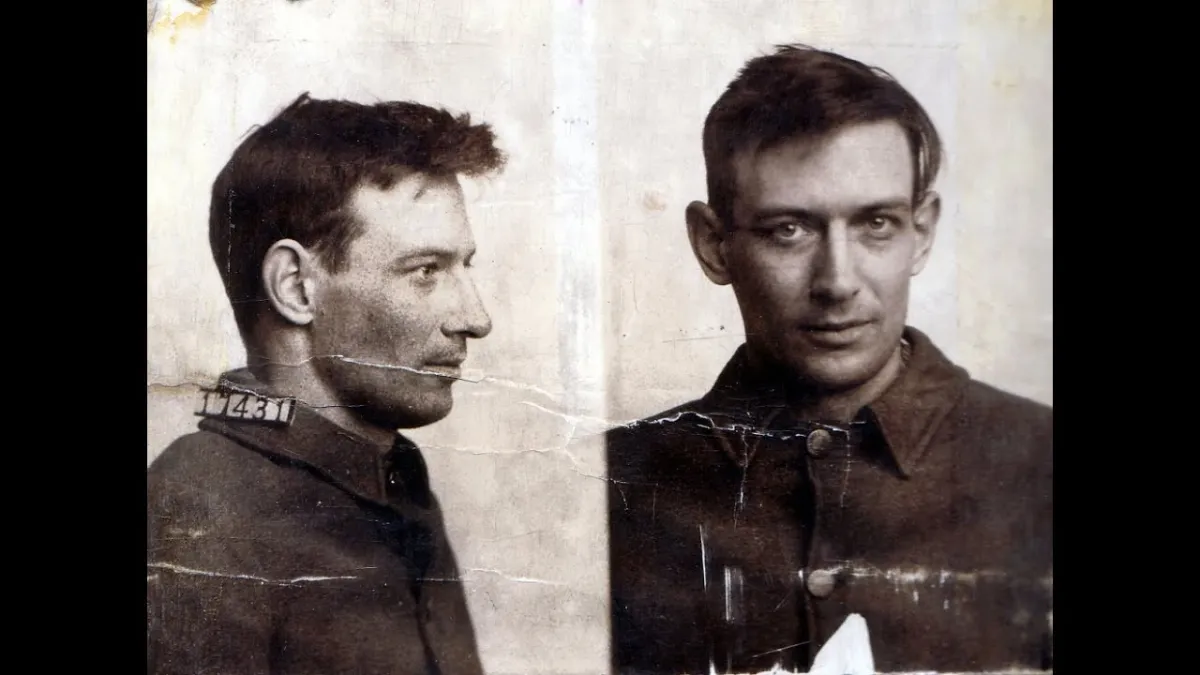 Photo: Robert Stroud, via i.ytimg.com
Convicted of murder in 1909 and later sentenced to life in solitary confinement after killing a guard at Leavenworth, Stroud spent decades in isolation. Prison authorities, in a decision they may have later regretted, allowed him to keep canaries in his cell. He turned that small permission into an obsession.
Over roughly three decades, Stroud conducted systematic research into avian disease, developing treatments for common bird ailments that were genuinely novel and medically sound. His two books on canary disease became standard references for bird breeders across the country. Veterinarians and aviculturists consulted them for years after his death.
He had no laboratory. He had no colleagues. He had a solitary confinement cell, a collection of birds, and an unrelenting curiosity about how living things worked. It was, by any reasonable measure, enough.
3. Malcolm Little — The Autodidact Who Became Malcolm X
Malcolm Little entered the Massachusetts prison system in 1946 as a small-time criminal with an eighth-grade education and a self-described contempt for intellectual life. He left in 1952 as Malcolm X — a man whose oratorical and analytical gifts would make him one of the most consequential political voices of the twentieth century.
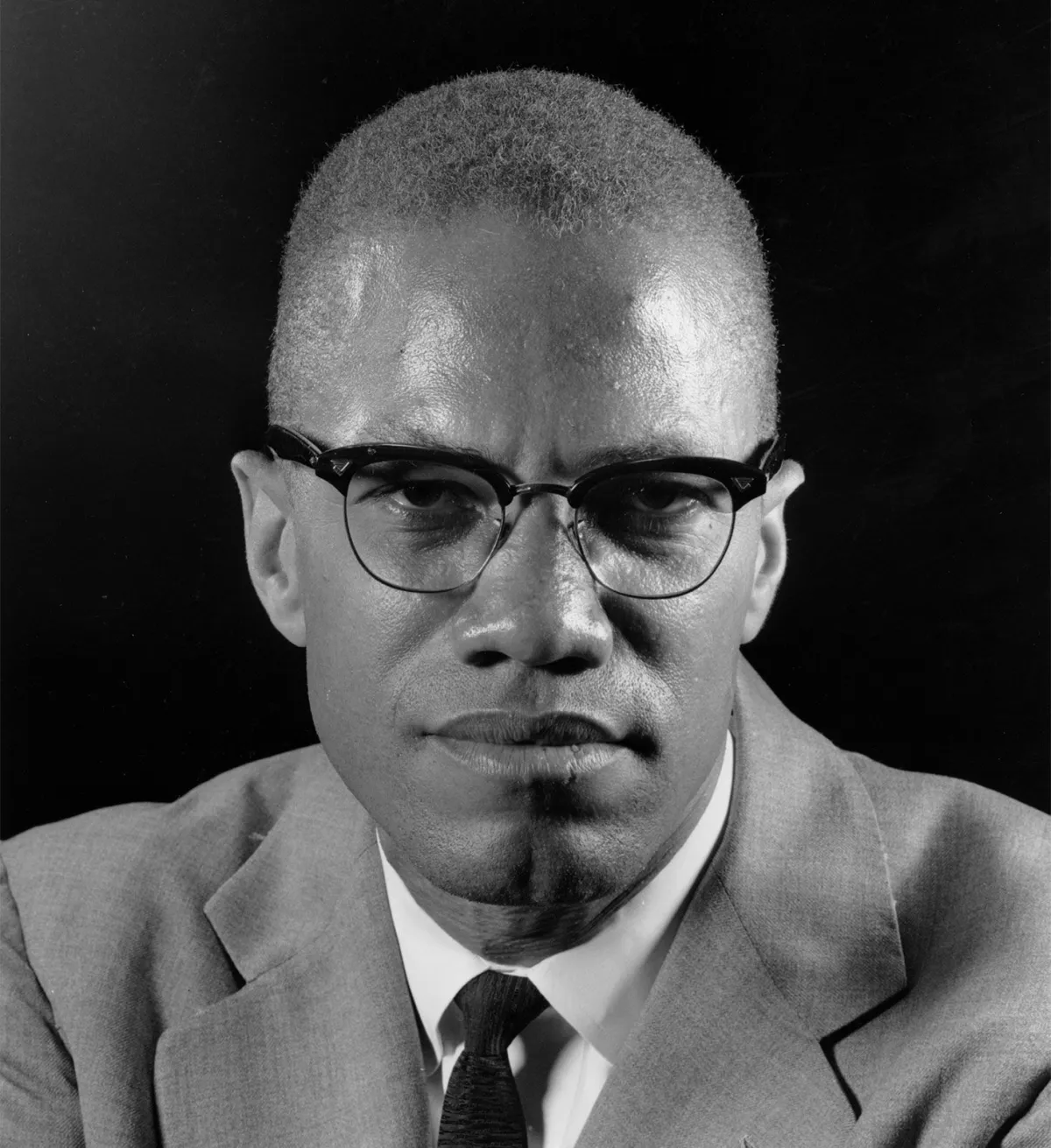 Photo: Malcolm X, via cdn.britannica.com
The transformation happened in the prison library.
Encouraged by his brother to explore the Nation of Islam's teachings, Malcolm began reading with a ferocity that he later described as almost physical. He copied the dictionary by hand, page by page, to build his vocabulary. He read history, philosophy, and political theory. He began writing and debating, honing arguments in prison discussion groups that became the training ground for a rhetorical style that would eventually fill auditoriums and unsettle governments.
The specific intellectual framework he developed in prison — the reinterpretation of American history through the lens of structural racism, the insistence on Black self-determination as a precondition for any meaningful equality — didn't just shape his own career. It shaped the entire ideological landscape of the civil rights era and the Black Power movement that followed it.
He came in with an eighth-grade education. He left with a worldview that Harvard professors would spend decades trying to categorize.
4. Eugene Debs — The Labor Leader Who Ran for President From a Cell
Eugene Debs had already built the American Railway Union and helped found the Social Democratic Party before federal authorities sent him to prison. But it was confinement — first in Woodstock, Illinois in 1895 for defying a federal injunction during the Pullman Strike, and later in Atlanta Federal Penitentiary from 1919 to 1921 for violating the Espionage Act — that crystallized both his socialist politics and his national profile.
From his Atlanta cell, Debs ran for president of the United States on the Socialist Party ticket in 1920. He received nearly a million votes. He was prisoner number 9653. The campaign materials said so plainly.
But the lasting impact wasn't electoral. It was legal and cultural. Debs's imprisonment galvanized the American labor movement, accelerated public debate about civil liberties during wartime, and helped build the institutional foundations of what would become the modern American labor rights framework. The conversations his incarceration forced — about free speech, about the rights of workers, about the relationship between government power and individual conscience — didn't end when he was released. They kept going for decades.
He didn't change history from prison by writing a book or inventing a system. He changed it by refusing to disappear, and by making his imprisonment impossible to ignore.
5. Piri Thomas — The Street Kid Who Wrote the Book on American Poverty
Piri Thomas grew up in Spanish Harlem in the 1940s and spent seven years in the Comstock and Sing Sing prisons in New York after a botched robbery left a police officer shot. He entered the system largely illiterate in a functional sense — educated on the street, not in the classroom. He left it with the manuscript of what would become Down These Mean Streets, published in 1967.
The book — raw, visceral, written in a voice that sounded nothing like the polished literary fiction of its era — became one of the foundational texts of Puerto Rican American literature. It was assigned in high schools and universities. It influenced the Nuyorican literary movement. It gave language and form to an experience that American culture had been systematically ignoring.
Thomas wrote the first draft in prison. He rewrote it on the outside. But the core of it — the unflinching honesty, the refusal to make the story easier than it was — came from seven years of having nothing left to protect.
The Uncomfortable Conclusion
Five stories. Five people who produced something lasting from inside a system designed to contain rather than cultivate.
None of them needed prison to be brilliant. All of them were brilliant before the gates closed. What incarceration gave them — in ways that were brutal and often traumatic — was the removal of distraction, the elimination of easy exits, and in some cases access to the one resource that can't be confiscated: time to think.
The lesson here isn't that confinement builds character. It's something stranger and more specific than that.
It's that the human mind, when it has nowhere else to go, tends to go somewhere remarkable.