The Man With the Mop: What a Hospital Janitor Saw That Surgeons Couldn't
Nobody Watches a Man With a Mop
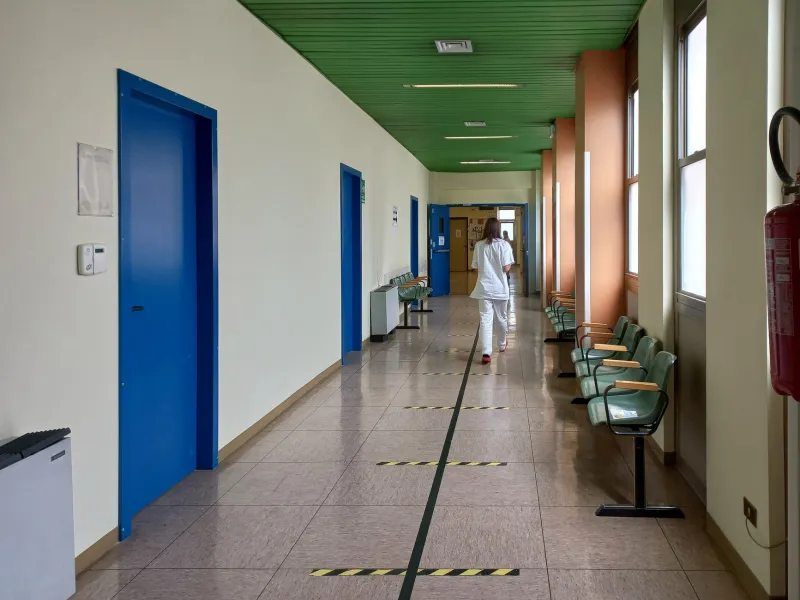
There's a kind of invisibility that comes with certain jobs. Darnell Cousins understood this better than most. For nearly a decade starting in the late 1980s, he pushed a wheeled bucket through the corridors of a regional hospital outside Memphis, Tennessee, mopping floors that would be dirty again by morning. He worked the overnight shift in the ICU — the intensive care unit — where the lights stayed on and the machines never stopped humming.
Doctors walked past him. Nurses talked over him. Administrators didn't see him at all.
And in that invisibility, Cousins saw everything.
What the Night Shift Teaches You
There's something almost meditative about repetitive physical work. Your hands know what to do, so your mind goes somewhere else. For Cousins, it went to the machines.
He noticed that patient monitors — the devices that track heart rate, oxygen levels, blood pressure — alarmed constantly. Not occasionally. Constantly. Alarms fired dozens of times per hour in some rooms, and the nursing staff, stretched thin and exhausted, had learned to tune most of them out. It wasn't negligence. It was survival. There were simply too many alerts and too few people to respond to all of them meaningfully.
Cousins had no medical training. He didn't know the clinical term for what he was watching — it's called "alarm fatigue," and it would later become one of the most studied problems in patient safety research. He just knew what he saw: sick people, important numbers, and a system that had stopped listening to itself.
He started keeping a small notebook. Not because anyone asked him to. Just because the patterns bothered him and writing things down helped him think.
The Notebook Nobody Asked For
Over the course of about two years, Cousins filled several of those notebooks. He tracked which alarms fired most often. He noted which ones nurses responded to and which ones they ignored. He sketched, badly by his own admission, rough ideas about how a smarter system might work — one that could distinguish between a genuinely dangerous reading and a monitor that had simply shifted on a patient's wrist.
He wasn't thinking about patents or products. He was thinking about the woman in Room 7 who coded one night while three alarms were going off in other rooms. He was thinking about whether that outcome might have been different.
In 1994, Cousins did something that took more nerve than most people will ever understand: he asked his supervisor if he could speak with someone in hospital administration. He brought his notebooks. He wore his uniform because he didn't own a suit.
The first meeting went nowhere. So did the second.
The Engineer Who Listened
What changed things wasn't persistence alone — it was luck, the kind that only finds you if you keep showing up. A biomedical engineer named Patricia Haverford was brought in as a consultant to evaluate the hospital's equipment infrastructure. She sat in on a routine staff feedback session, mostly out of obligation, and Cousins happened to be there because a sympathetic floor manager had quietly added his name to the sign-up sheet.
Haverford later said she almost didn't stay. Then Cousins opened his notebook.
"He had essentially mapped the alarm ecosystem of that ICU from the ground up," she told a trade publication years later. "He didn't have the vocabulary, but he had the data. And more than that, he had the insight."
Haverford and Cousins began meeting informally after her consulting engagement ended. She translated his observations into engineering language. He pushed back when her proposed solutions didn't match what he'd actually witnessed on the floor. It was, by all accounts, an unlikely collaboration — a biomedical engineer with a graduate degree and a janitor with a high school diploma, arguing over circuit diagrams at a Denny's in Memphis.
What They Built
The device they eventually developed — a tiered alarm prioritization system that used pattern recognition to classify alerts by urgency — wasn't the first attempt to solve alarm fatigue. But it was one of the first to be designed from the patient room outward rather than from the engineering lab inward. The difference was Cousins. He had spent ten years inside the problem.
The prototype was rough. Getting it funded was harder than building it. Medical device investment is a slow, skeptical world, and neither Cousins nor Haverford had obvious credibility with venture capital. They were turned down repeatedly.
They eventually secured a small grant through a hospital safety foundation, refined the device over three years, and licensed the core technology to a mid-sized medical equipment manufacturer in the early 2000s. The system, in various evolved forms, is now a standard feature in patient monitoring platforms used across hundreds of American hospitals.
Cousins received a licensing fee and a co-inventor credit on the patent. He used the money to put his two kids through college.
The Vantage Point Nobody Wanted
The story of Darnell Cousins doesn't fit neatly into the mythology of innovation. He didn't drop out of Stanford. He didn't pivot from a failed startup. He mopped floors and paid attention, which turns out to be its own kind of genius.
What he had — and what credentialed professionals in that same building lacked — was proximity without assumption. Doctors and nurses had been trained to work within the system as it existed. Cousins had no investment in the system at all. He just watched it, night after night, and thought about why it wasn't working.
Alarm fatigue still costs lives in American hospitals. The problem hasn't been fully solved. But the fact that it became a recognized patient safety crisis — one that the FDA and hospital accreditation bodies now actively address — owes something to the man who first mapped it from the floor up, one notebook page at a time.
The mop, it turns out, was just the cover story.