The Towns That Tried to Forget Themselves — and Couldn't
The Towns That Tried to Forget Themselves — and Couldn't
There is a particular kind of desperation that sets in when a town's last employer closes. It's not just economic — it's existential. The question isn't only how do we pay our bills but who are we now. And in that panicked moment of reinvention, the instinct is almost always the same: run from the past as fast as possible. Rename things. Repaint things. Tear down the building that everyone associates with the industry that failed you.
Five American towns tried exactly that. And what happened next was stranger, and more instructive, than anyone involved would have predicted.
Coalport, Pennsylvania: The Town That Tried to Go Digital
By the early 2000s, Coalport had been economically hollowed out for a generation. The mines that had defined the town since the 1870s had been closed for decades, and the name itself — Coalport — had started to feel like a punchline. A regional economic development group arrived with a proposal: rebrand the town as a center for remote-work infrastructure, capitalize on cheap real estate and broadband investment, and market the area to young professionals fleeing urban costs.
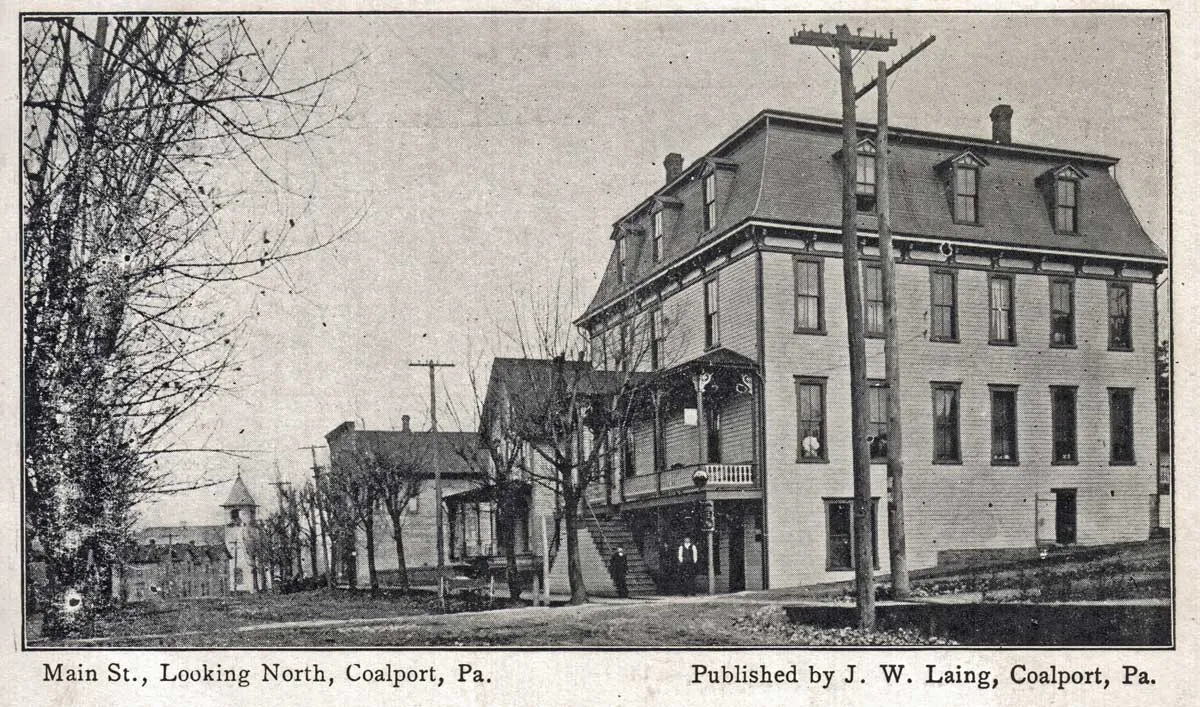 Photo: Coalport, Pennsylvania, via www.usgwarchives.net
The rebranding effort was genuine and not entirely unsuccessful. A co-working space opened. A few small tech firms took up residence in renovated storefronts. The town began to refer to itself, in promotional materials, as a hub for the new Pennsylvania economy.
But the visitors who started showing up weren't remote workers. They were history tourists — people who had read about the anthracite coal era, who were researching family genealogies, who wanted to see the old mine headframes that were still standing on the edge of town. The infrastructure that the development group had viewed as an embarrassment turned out to be the draw. The co-working space eventually closed. The heritage tourism operation is still running.
Coalport didn't become a tech hub. It became a place where people come to understand what American industrial labor actually looked like. That's not nothing. That's, in fact, a lot.
Astoria, Oregon: The Cannery That Wouldn't Stay Bulldozed
Astoria's salmon canning industry dominated the Columbia River mouth for nearly a century before collapsing in the mid-twentieth century under the combined weight of overfishing, changing markets, and industrial consolidation. By the 1980s, the canneries that lined the waterfront were derelict, and city planners were eager to replace them with something — anything — that felt modern and forward-looking.
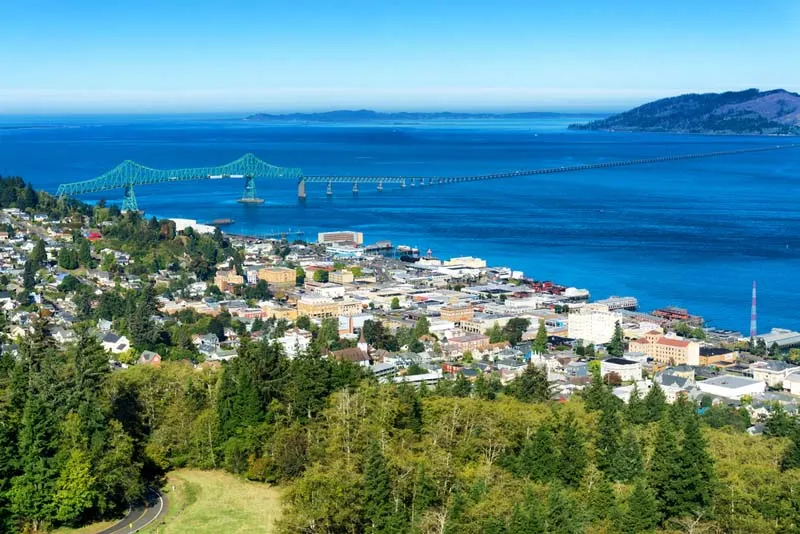 Photo: Astoria, Oregon, via astoriariverwalkinn.com
Several of the old cannery buildings were demolished. The waterfront was redesigned with an eye toward generic commercial development. For a while, it seemed to be working: new restaurants, a revitalized downtown, the slow return of foot traffic.
Then something unexpected happened. The remaining cannery structures — the ones that hadn't been torn down yet — started attracting artists. The cheap, cavernous spaces were perfect for studios and galleries. A film community began using Astoria as a production base, drawn partly by the tax incentives Oregon offered and partly by the atmospheric decay of the surviving industrial waterfront.
Astoria is now known, among a certain kind of traveler, as one of the most cinematically interesting small cities on the West Coast. The canneries that planners once viewed as obstacles became the aesthetic foundation of a creative economy. The town didn't succeed by escaping its past. It succeeded by letting its past get strange and interesting on its own terms.
Lowell, Massachusetts: The Mill That Refused to Be Metaphor
Lowell's story is well-documented enough that it almost doesn't belong on this list — except that it's so frequently misread. The standard account presents Lowell's transformation from failed mill city to National Historical Park as a triumphant act of intentional preservation. The reality was messier.
For most of the mid-twentieth century, Lowell's political and business establishment was deeply ambivalent about the mill history. The textile era was associated with labor exploitation, immigrant poverty, and industrial decline. The idea of building a civic identity around it felt, to many residents, like celebrating the thing that had beaten them.
The National Park designation in 1978 was partly a federal imposition — money and attention arriving from outside, attached to a historical interpretation that local leaders hadn't entirely asked for. What happened afterward was a negotiation between the story outsiders wanted to tell about Lowell and the story Lowell wanted to tell about itself. That negotiation is still ongoing. But the result — a city that draws hundreds of thousands of visitors a year to engage with the history of American industrialization — emerged from a process that was far more ambivalent and contested than the success story makes it sound.
Lowell's lesson isn't that preservation is easy. It's that the history you're most embarrassed by is often the history other people find most compelling.
Bisbee, Arizona: The Mine That Became a Mirror
Bisbee spent the better part of the twentieth century trying to figure out what to do with itself after copper mining collapsed. Various reinventions were attempted — light manufacturing, retirement community marketing, generic Southwestern tourism. None of them quite took.
What eventually worked was stranger. Artists and counterculture figures began arriving in the 1970s, drawn by the cheap Victorian housing that the mining boom had left behind and the altitude that kept summer temperatures bearable. The town didn't plan this. It didn't market to this demographic. It just became, over time, a place where people who didn't fit elsewhere found that they fit.
Bisbee is now one of the most visited small towns in Arizona, known for its arts scene, its eccentric character, and its remarkably intact historic architecture. The mining past isn't hidden — the Lavender Pit, an open-pit copper mine visible from the center of town, is one of the primary tourist attractions. The town that once wanted nothing more than to move past its industrial history now markets that history as its defining feature.
The pivot wasn't strategic. It was accidental. And it worked precisely because it was honest.
Centralia, Pennsylvania: The Town That Couldn't Reinvent Itself — and Became Legendary Anyway
Centralia is a special case. The underground mine fire that has been burning beneath the town since 1962 didn't give the community the option of reinvention — it forced evacuation, condemned most structures, and reduced the population from over a thousand to a handful of stubborn holdouts. Centralia didn't try to rebrand. It tried to survive.
But the very catastrophe that destroyed Centralia made it one of the most visited sites in Pennsylvania. People drive hours to walk the cracked, weed-split highway where steam still rises from the ground, to photograph the ghost-town remnants, to stand in a place that looks like the end of something. Centralia didn't become a destination by trying. It became a destination by being, in the most literal sense, irreplaceable.
What These Towns Are Actually Saying
Put these five stories next to each other and a pattern emerges that runs against everything economic development consultants typically advise. The towns that tried hardest to escape their histories — that bulldozed the old buildings, changed the names, hired the branding agencies — succeeded least. The towns that were forced, by circumstance or stubbornness or simple lack of resources, to sit with who they actually were — those are the ones people are still visiting.
This isn't an argument against growth or change. It's an argument for honesty. The most durable thing any community — or any person — can offer is authenticity. Not the performed kind, not the kind that gets workshopped into a tagline, but the kind that comes from actually being somewhere, actually having a history, actually having gone through something real.
The towns that tried to forget themselves couldn't. And it turned out that was the best thing that ever happened to them.